

After the summer break, the September restart quickly highlights the gaps between available offices and the way the team actually works: more concentrated on-site days, meetings starting again, upcoming hires, a lack of meeting rooms, underused spaces or a hybrid organization that is still not fully stabilized.
Looking for offices for September is therefore not just about finding available floor space at the right time. The real question is whether the space allows the team to work in the right conditions: meet, focus, welcome clients, onboard new employees, absorb peak attendance and remain consistent with the months ahead.
Before comparing offers or scheduling visits, it is worth clarifying a few criteria: simultaneous presence, priority uses, location, level of flexibility, installation timeline and services already included. This step helps you avoid poor decisions when searching for offices, especially when the September timeline puts the company under pressure.
Key takeaways
September is a good time to check whether your offices still match the way the team actually works, not just its theoretical headcount.
The right sizing depends on simultaneous presence, peak attendance and priority uses: meetings, focus work, reception, confidentiality, onboarding or collective work.
A hybrid team does not necessarily need fewer offices. It mainly needs a better-calibrated space, able to welcome the right people at the right time.
The office should be seen as a working-use solution: what matters is what the team will actually be able to do there every day.
The shorter the installation timeline, the more decisive simplicity becomes: furniture, internet connection, meeting rooms, access, included services and a clear point of contact can save valuable time.
What September really reveals about your offices
September is not just an administrative restart. In many companies, it makes the organization easier to read. Employees gradually return, meetings resume, projects become more structured, new hires are onboarded and decisions for the coming months become more concrete.
This is precisely why a space that still seemed acceptable before the summer period can reveal its limits at the restart. Meeting rooms are booked more often, some days lack enough desks, the atmosphere feels too empty at other times, or the location discourages people from coming in.
Before launching a search, it is therefore important to look at what September brings to light. Is the company growing? Do planned hires require more desks or more rooms? Are employees all coming back on the same days? Do the current offices still allow the company to welcome clients, organize workshops or work quietly?
This diagnosis prevents you from immediately looking for square meters when the real issue may be elsewhere. A suitable office is not just an occupiable space. It is a place that supports the way the team works, without creating unnecessary friction when business activity picks up again.
Do not confuse total headcount, actual presence and peak attendance
Office sizing is often approached through a simple question: how many people are on the team? This indicator is useful, but it is no longer enough. With hybrid work, travel, meetings concentrated on certain days and different rhythms depending on roles, total headcount does not always reflect the real use of the office.
A company of 30 people does not necessarily need 30 occupied desks every day. But that does not mean it can settle for a space designed for 15 people if everyone comes in on Tuesday, Thursday or for team meetings. Conversely, a surface area sized for the full headcount can become costly and lifeless if a large part of the team works remotely several days a week.
The right approach is to distinguish several levels of analysis.
| Indicator | Question to ask | Risk if overlooked |
|---|---|---|
| Total headcount | How many people are currently on the team? | Looking for a space that is too large or too small |
| Actual presence | How many people really come on site each week? | Paying for desks that are rarely used |
| Peak attendance | Which days concentrate the most people? | Overloading the office at key moments |
| Critical presence | Which teams need to work together physically? | Weakening coordination or collective projects |
This distinction changes the way you search. The question is not only whether to reduce or increase the surface area. You need to understand the days when the office must absorb the most people, the moments when certain teams need to meet, and the uses that cannot be handled properly remotely.
A well-chosen space may therefore be more compact, but better equipped. Or, on the contrary, slightly more generous because peak attendance, meetings and confidentiality needs justify it. The right sizing does not depend on an automatic formula. It depends on the team’s actual rhythm.
Identify the uses that return in September
At the restart, offices often host very specific uses: launch meetings, team check-ins, client meetings, onboarding, internal workshops, training sessions, collective work sessions, confidential interviews or management meetings.
This is why it can be reductive to think only in terms of desk numbers. A team may have enough seats, but still lack what makes the office truly useful: available meeting rooms, quiet zones, spaces to isolate, coordination areas, reception capacity, good acoustics or smooth circulation.
Before looking for a new address, you need to ask what the team should be able to do in these offices. Do employees need to work side by side several days a week? Are meetings frequent? Do client calls require a minimum level of confidentiality? Does the company regularly welcome partners? Do new employees need to be supported on site?
These questions help move beyond a purely real estate-based view. Offices are also an organizational support. If September is meant to relaunch collective momentum, onboard new employees or restore a more stable rhythm, the chosen space must support these uses from the first few weeks.
Check whether your current offices are too small, too large or simply poorly suited
When a company considers changing offices in September, the diagnosis is often expressed quite simply: “we are short on space” or “we have too much space”. In practice, the situation is sometimes more nuanced.
Offices can genuinely be too small. This is the case when recruitment continues, meeting rooms are saturated, shared spaces are no longer sufficient or teams no longer have enough areas to work properly. The challenge is then to absorb growth without having to restart another search a few months later.
Conversely, some offices become too large. Hybrid attendance, frequent travel or an internal reorganization can leave many desks empty for part of the week. The cost then becomes difficult to justify, especially if unused areas create neither comfort nor value for the team. In this case, it can be useful to evaluate the real cost of office space according to team size, rather than reasoning only in square meters or displayed rent.
But there is a third case, often more interesting: the offices are neither too large nor too small, but poorly suited. The overall surface area seems correct, but the layout no longer works. Too much open space, not enough meeting rooms, too few quiet zones, uncomfortable acoustics, impractical shared areas, a hard-to-reach address or a lack of services can undermine the everyday experience.
In this case, changing offices is not just about adjusting a surface area. Above all, it helps the company find a simpler, clearer, better-equipped space that is more consistent with the way the team really works.
Anticipate July and August for a September move-in
If the goal is to be installed by September, the timeline needs to be framed early enough. The search can move quickly, especially for flexible or already-equipped solutions, but some steps remain hard to compress: internal approval, visits, choice of format, contract, access preparation and team installation.
| Step | Recommended period | What to plan for |
|---|---|---|
| Need framing | Early July | Headcount, actual presence, priority uses, budget, location |
| Search and first contact | July | Shortlist of spaces, first exchanges, availability checks |
| Visits and comparison | July to late August | Format, included services, quality of meeting rooms, access, installation timeline |
| Approval and contract | August to early September | Final decision, conditions, commitment, availability date |
| Installation | Late August to September | Access, badges, workstations, internet connection, onboarding into the space |
In practice, closing an office can take only a few days when the space is available, equipped and the need is simple. For a larger office, a specific configuration or longer internal approvals, it is better to allow up to one month. It is therefore preferable to start the first discussions before urgency limits the range of options too much.
Which type of office should you choose according to your September situation?
Not all companies have the same need in September. Some want to support rapid growth. Others want to test a new hybrid rhythm, reduce their surface area, regain a more stable workplace or move in quickly without managing a heavy real estate project. The right format therefore depends on the actual situation, more than on a theoretical preference for one type of office.
| September situation | Real need | Format to consider |
|---|---|---|
| The team is growing quickly | Absorb hiring without restarting a search in three months | Flexible office or managed office |
| The hybrid rhythm is still uncertain | Test the right sizing before making a heavier commitment | Flexible or scalable space |
| The current offices are too dispersed | Regain an identified place to work together | Private office or fitted-out floor |
| The company has little time to move in | Avoid furniture, works, providers and logistics | Turnkey office |
| Meetings and workshops are strongly returning | Have suitable rooms that are simple to book | Hybrid space, occasional office or dedicated meeting room |
| Business visibility is still limited | Keep room for adjustment | Flexible solution or shorter commitment |
| The team welcomes clients or partners | Preserve image, reception and confidentiality | Private office, fitted-out office or managed office |
Three formats to compare according to your need
-

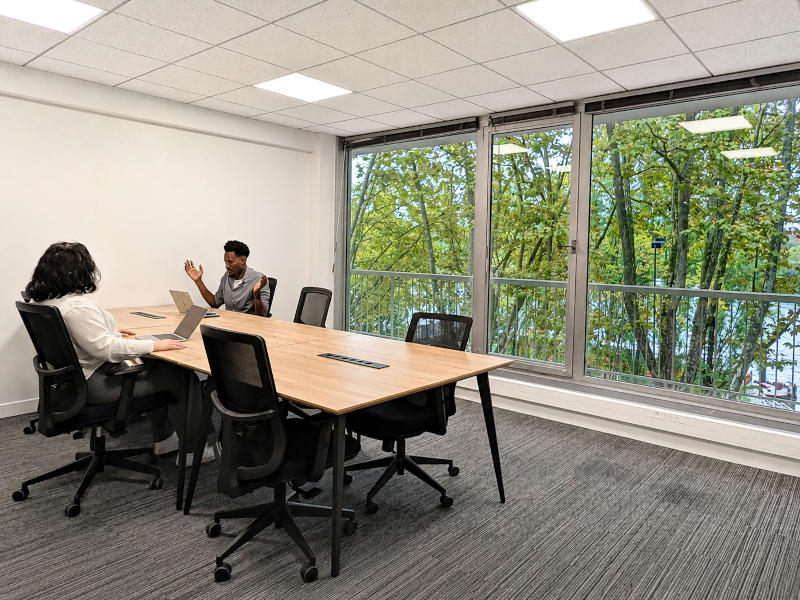
- Private / closed office
-
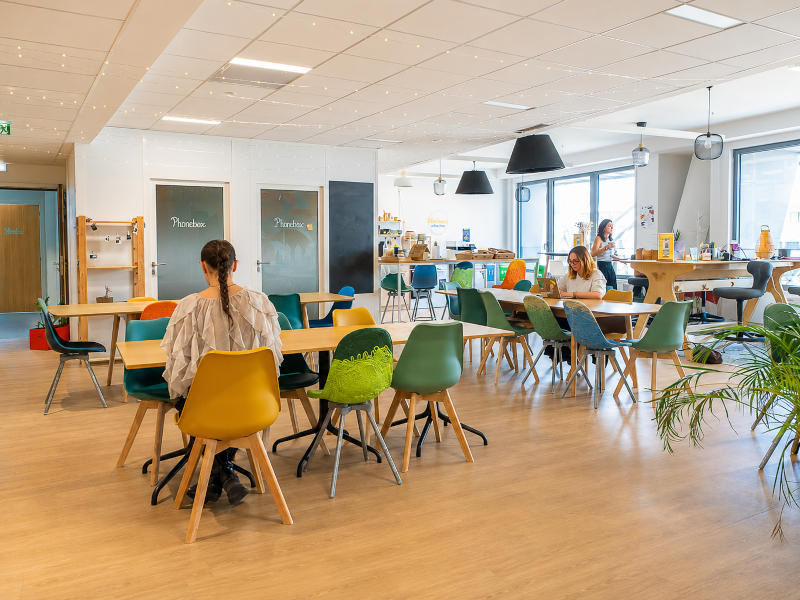
- Coworking
-

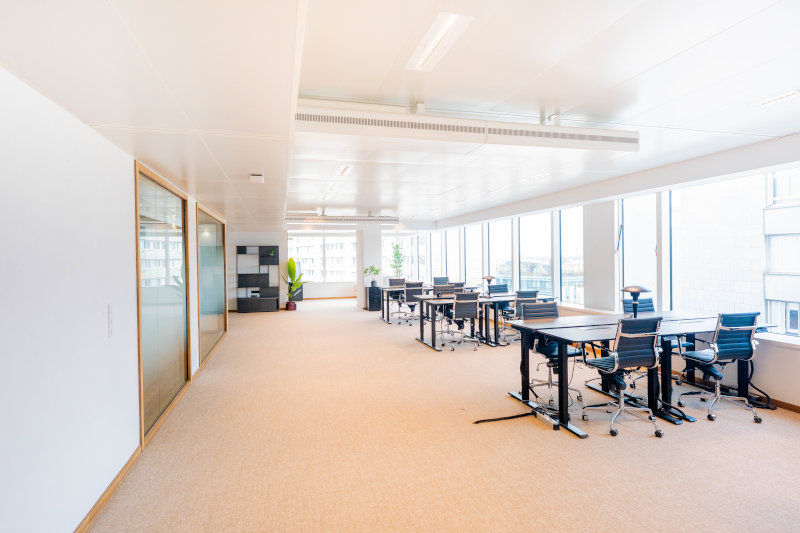
- Managed / flexible office
- Coworking: for a one-off, light or highly flexible need.
- Private / closed office: for a team that wants a dedicated, identifiable and more confidential space.
- Managed / flexible office: for a team looking for a private, ready-to-use space with integrated services.
This table is designed to avoid poor reflexes, not to put every company into a fixed box. Coworking can be relevant for a light or occasional need. A private office is better suited to a team that needs to meet regularly. A managed office can simplify a fast installation, especially when the company wants an equipped space with services already in place.
The right choice therefore depends less on the name of the solution than on how well it matches the need. A company simply looking for available desks will not use the same criteria as a team that needs to recreate a work framework, welcome clients or stabilize a hybrid organization.
Think of location as a usage criterion
Location is often treated as a matter of address, image or price. In September, it should also be considered as a usage criterion. When on-site presence resumes, commuting becomes concrete again. A poorly chosen location can reduce the desire to come in, complicate meetings, lengthen journeys or create unnecessary fatigue.
In a hybrid context, this question becomes even more important. If employees no longer come in every day, days spent at the office need to have real value. The address must make these moments of presence easier: public transport access, proximity to a train station or metro, acceptable commute time, services around the office, easy reception for clients or partners, consistency with the company’s image.
A central address is not always essential. Nor is a prestigious address. However, a location must be practical. It must match team commuting habits, business meetings, the most important on-site days and the company’s type of activity.
The more employees come to the office on selected days, the more the space needs to be worth the trip. This does not mean looking for a spectacular place. It means choosing an address that simplifies organization, reduces friction and gives people a clear reason to meet on site.
Choose the right level of flexibility for the months ahead
September is also a moment of projection. Some companies already know they will recruit. Others are waiting to confirm their activity level, budget or hybrid rhythm. Some want to stabilize their team in a more long-term place, while others are looking for a transitional solution before making a more binding decision.
The level of flexibility should be chosen according to this visibility. If the company expects rapid growth, it should avoid a space that will become too small as soon as the next hires arrive. If the attendance rhythm remains uncertain, an overly rigid commitment can create an unnecessary constraint. If the team needs to structure itself, a solution that is too light may, on the contrary, lack framework.
Flexibility is therefore not only about choosing a shorter contract. It must allow the company to absorb real change: more employees, lower presence, new on-site days, temporary need, one-off project, more frequent client reception, transition before a more traditional lease or fast installation.
The right trade-off is not always the most flexible one. It is the one that matches the company’s level of certainty. A stabilized organization may need a more durable, identifiable and comfortable space. A company in an adjustment phase will benefit more from keeping some room to maneuver. In both cases, the important thing is to avoid choosing a framework that freezes too early an organization that is still moving. This is precisely the type of situation where it can be useful to choose between a flexible office and a traditional lease with a more nuanced view than commitment duration alone.
Do not underestimate the simplicity of moving in
As September approaches, available time quickly shrinks. Between holidays, internal approvals, recruitment, projects to relaunch and organization of the final quarter, looking for offices can easily become a heavy topic. Simplicity of installation should therefore be part of the selection criteria from the start.
An available space is not always enough. You still need to check what is actually ready: furniture, internet connection, access, badges, meeting rooms, cleaning, reception, visitor management, security, everyday services and a point of contact in case of a problem. Each missing element may seem secondary, but the accumulation can quickly create a disorganized September restart.
The shorter the timeline, the more ready-to-use solutions become valuable. An office that is already equipped, with included services and simplified management, allows the team to focus energy on work rather than on installation. This can be particularly useful for a company that needs to welcome a team quickly, test a new organization or avoid multiplying providers. In this context, ready-to-use managed offices can provide a simpler framework to activate, with a private, equipped space designed to limit day-to-day management.
In a managed or turnkey office logic, the value is not only having an already-furnished space. It is also about centralizing operational topics: access, internet, cleaning, maintenance, meeting rooms, supplies, everyday services or last-minute adjustments. For a team returning to its rhythm in September, this centralization can make the difference between a smooth move-in and a series of small problems to solve urgently.
The challenge is not only to save time. It is also to secure the first few weeks. A smooth arrival gives employees clear points of reference, avoids everyday irritants and allows the team to regain its rhythm without turning the office into a new project site.
Mini checklist before looking for offices for September
Before comparing offers or scheduling visits, a few questions help frame the need more reliably.
- Simultaneous presence: how many employees will be on site at the same time on the busiest days?
- Peak attendance: which days or moments concentrate meetings, team check-ins or collective sessions?
- Recruitment: how many people could join the team in the next 3 to 12 months?
- Priority uses: what is missing today: rooms, confidentiality, quiet zones, reception, collective spaces?
- Location: does the chosen address really make on-site presence easier?
- Duration of need: is the company looking for a long-term, temporary or still exploratory solution?
- Installation: are furniture, internet, access, cleaning and services already in place or still to be organized?
- Everyday simplicity: who manages the small issues once the team has moved in?
This check mainly helps identify gaps before visits: a space that looks attractive can lack meeting rooms, be poorly calibrated on high-attendance days or require too many adjustments before it is truly operational. In September, these details can quickly weigh on the organization. It is better to identify them upstream, while the company can still compare several options with clarity.
Find offices that are suitable, not just available
September often creates schedule pressure. The company needs to restart quickly, welcome teams, relaunch projects, organize meetings and sometimes onboard new employees. In this context, it can be tempting to choose the first available space that seems to match the budget or the desired surface area.
However, the right September office is not necessarily the largest, the most central or the fastest to access. It is the one that matches the team’s actual rhythm, the uses that are returning, peak attendance, meeting needs, the expected level of confidentiality and the company’s ability to project itself over the coming months.
A well-chosen space should allow employees to meet when useful, work in good conditions, welcome visitors properly, isolate when necessary and regain a smooth organization after the summer period. It should also remain consistent with the company’s level of visibility: stable enough to provide a framework, flexible enough not to become a constraint too early.
Looking for offices for September is therefore not only about solving a real estate issue. It is about choosing a point of support for the team: a place able to support real work, accompany the coming months and prevent the restart from becoming a new source of disorganization.
To go further, it can be useful to compare the flexible and fitted-out office solutions available depending on the level of autonomy required, or to browse Hiptown spaces to identify a location suited to the team’s rhythm.
