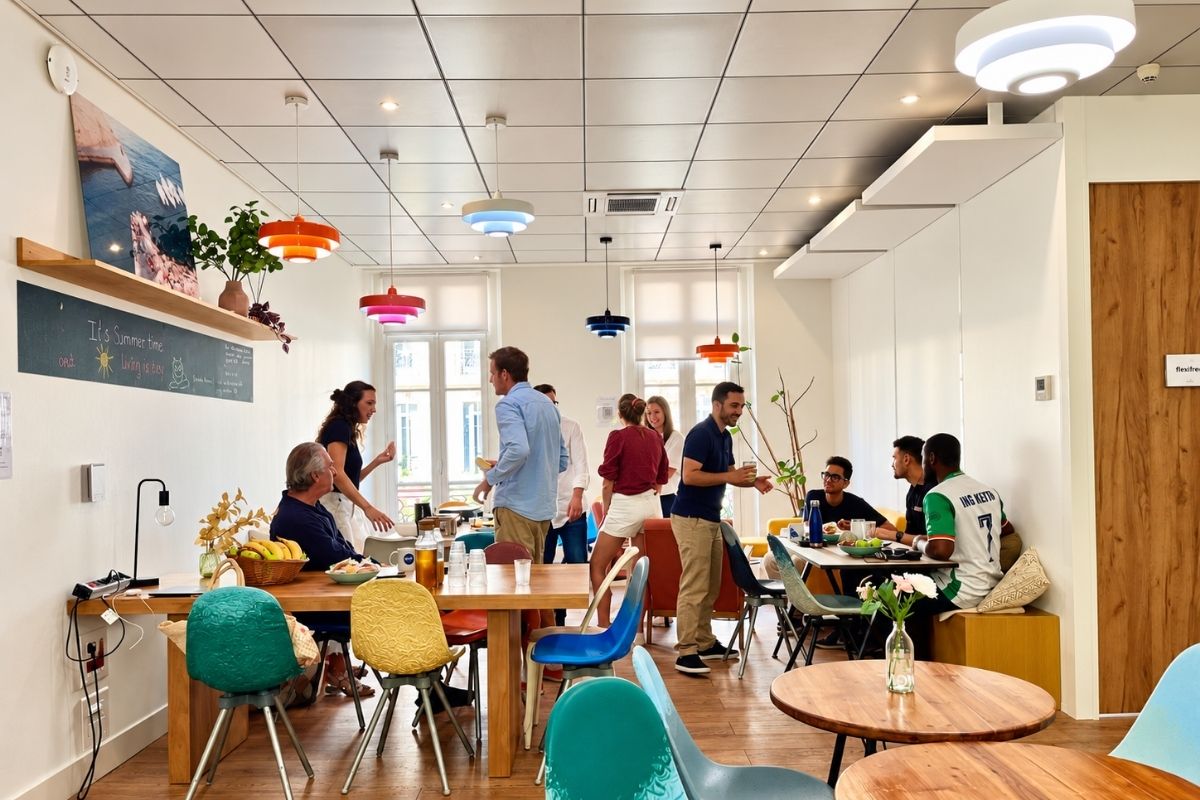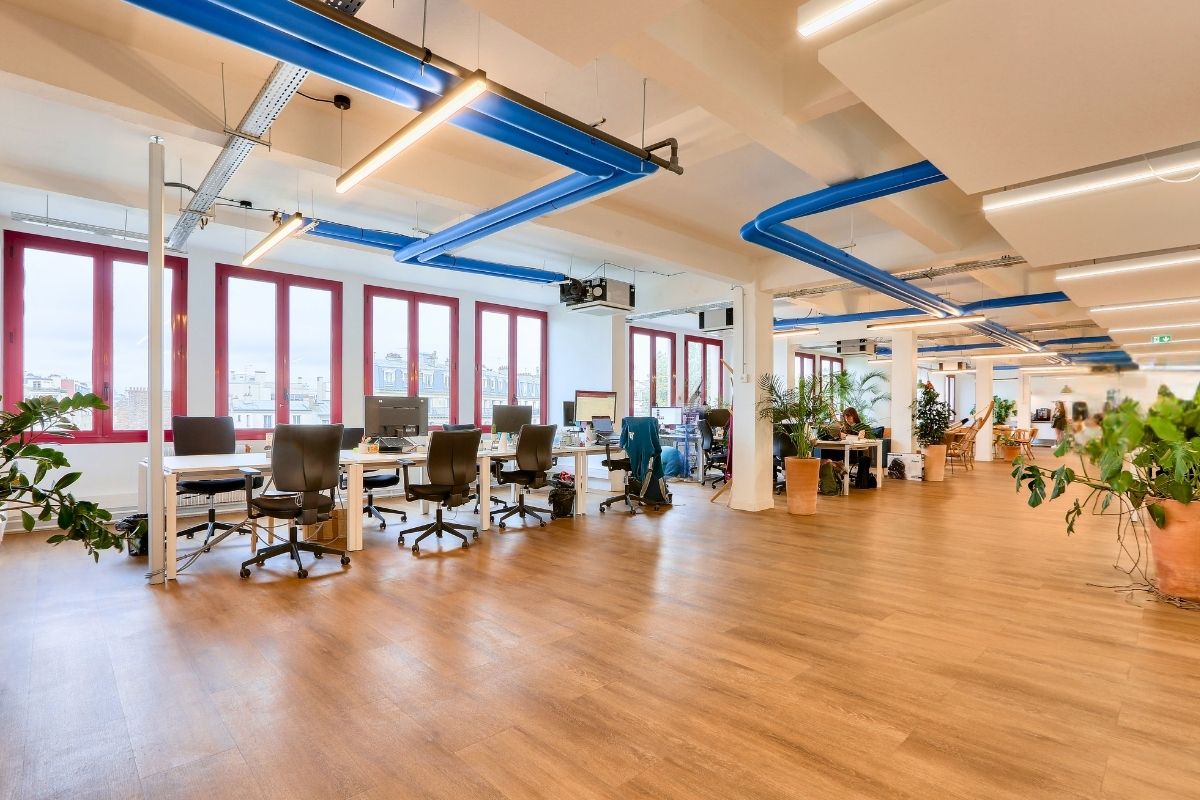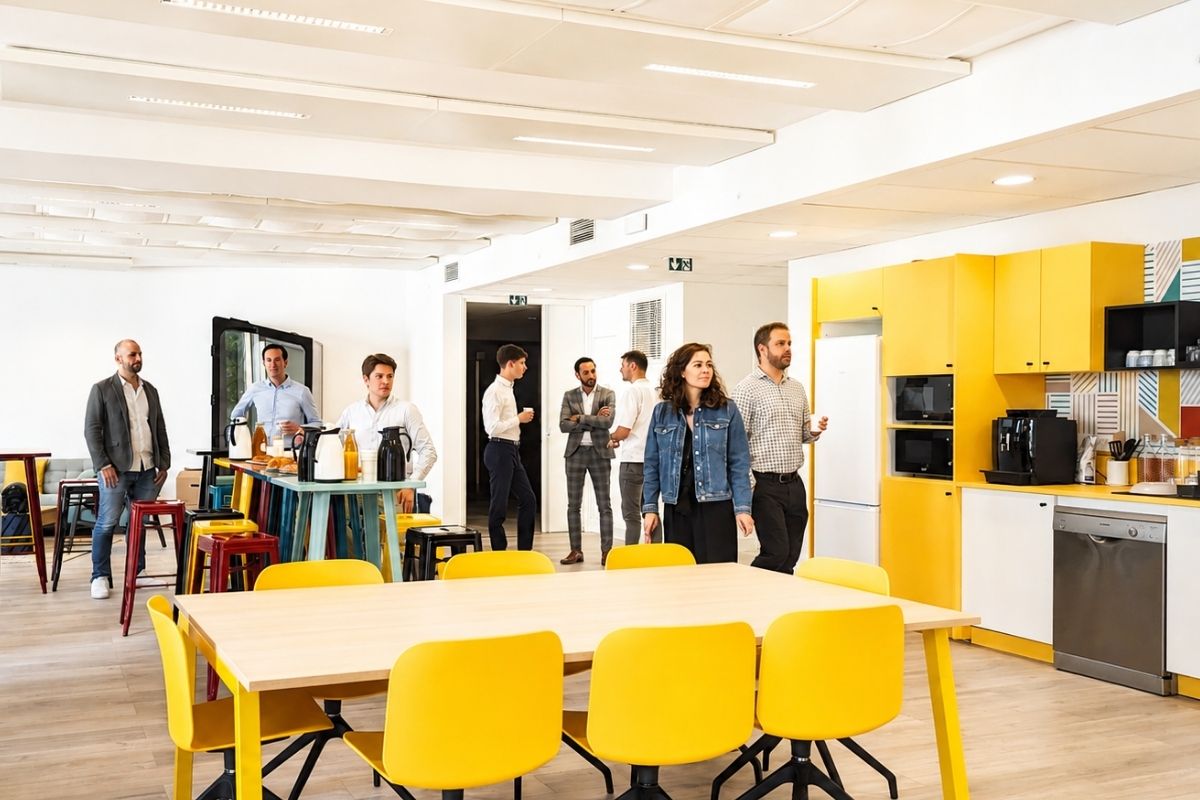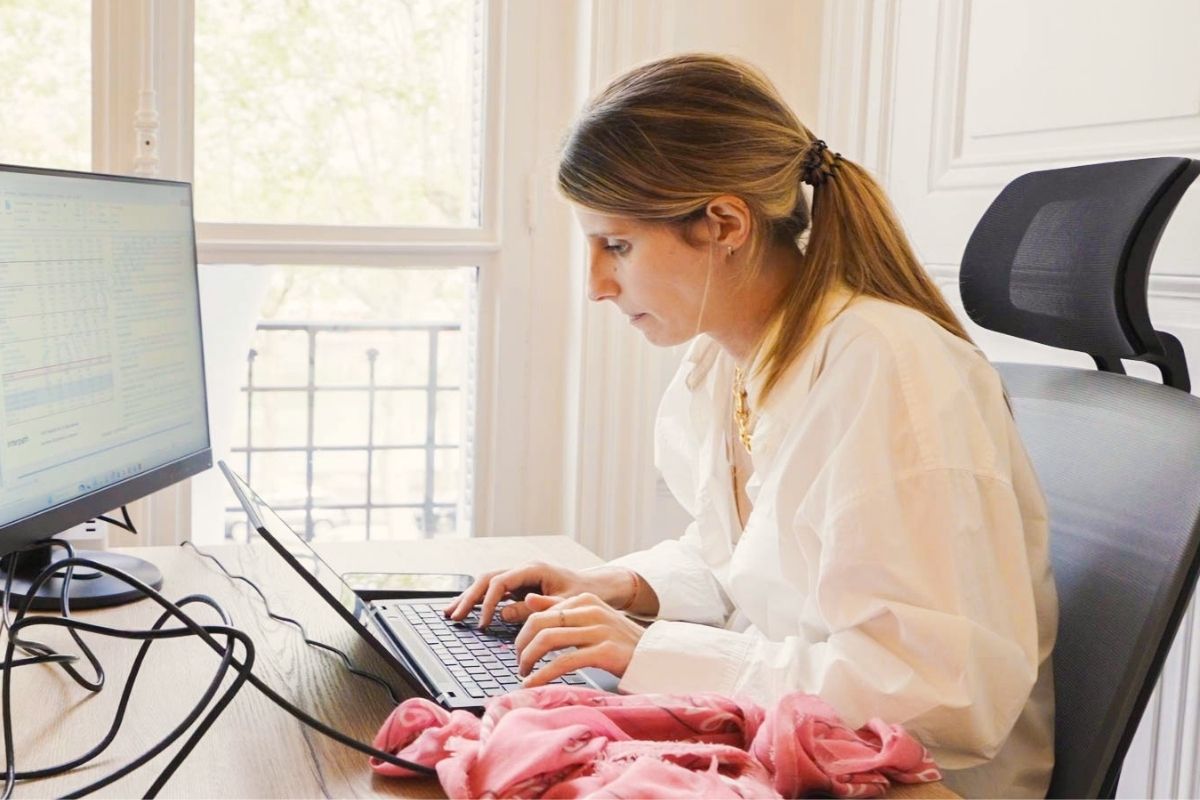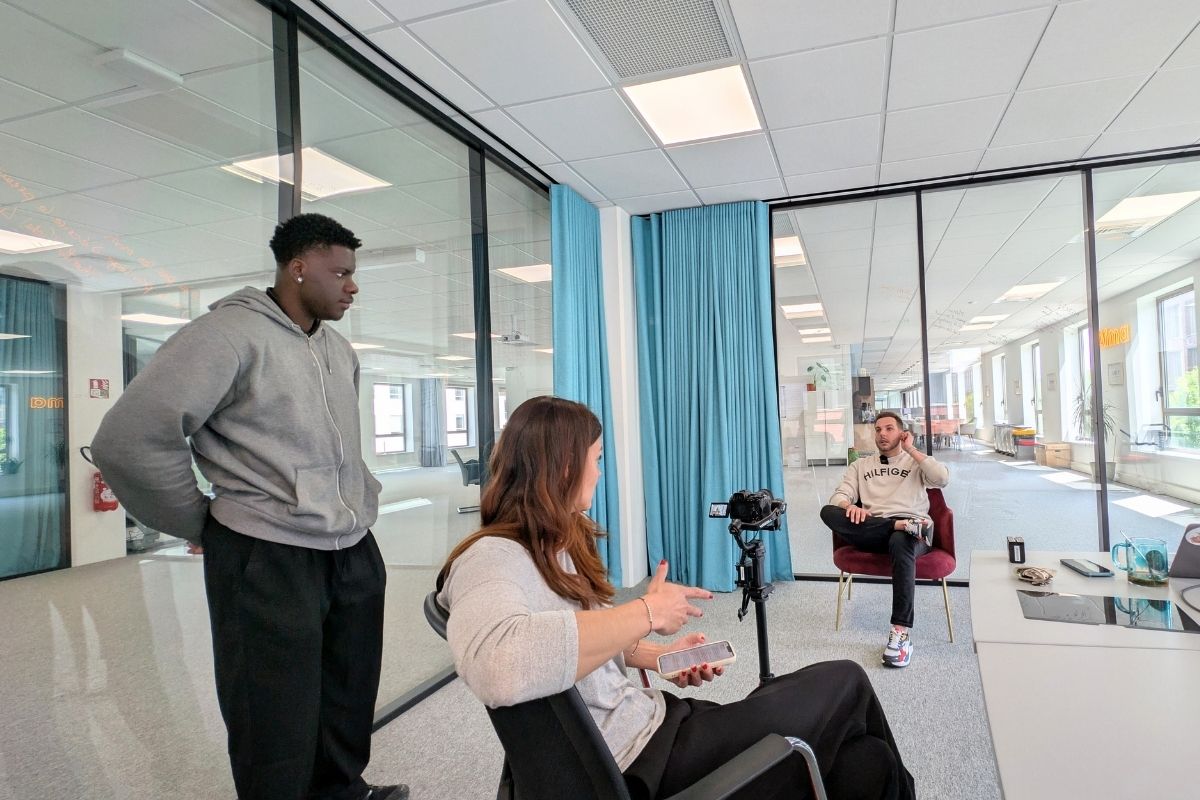
Offices can be highly effective settings for filming. They immediately create a professional, contemporary and credible atmosphere on screen. A meeting room can host an interview, an open space can suggest everyday business life, a private office can support a more confidential scene, while a shared area can add rhythm to a corporate video, an advertisement or content designed for social media.
But renting offices for a production does not simply mean looking for a backdrop. A space can be bright, well designed and pleasant to visit, then become much less practical once the crew, equipment, schedule, sound recording and movements are taken into account. You therefore need to look not only at what the camera will see, but also at everything that will allow the day to run smoothly.
An office can look attractive during a location scout and turn out to be complicated on the shoot day: not enough camera depth, background noise, difficult access, unstable light or no space for the crew. The goal is therefore not to find the most flattering backdrop, but a location capable of supporting the entire production day.
This nuance changes the way you choose. For an interview, a photo shoot, a brand video or a fiction project, the right space must combine visual appeal, easy access, practical use, control over permitted uses and clear occupancy conditions. These details, often invisible in the frame, are frequently what save or cost the most time.
Key takeaways
An office can be an excellent filming location, provided it is as practical to use as it is pleasant to film.
The decisive criteria are often off camera: access, noise, storage, annex spaces, circulation, parking, reinstatement and the on-site contact person.
The need varies significantly depending on the format: interview, brand video, advertisement, photo shoot, fiction project or social media content do not involve the same constraints.
Before booking, you need to clarify the permitted uses: timings, equipment, number of people, rooms used, furniture, insurance, liability and handover conditions.
For a short production, simplicity matters as much as aesthetics. A ready-to-use location avoids many time losses before, during and after the shoot.
Look beyond the visible backdrop
The first instinct during a location scout is often to assess what the space conveys on camera: light, style, furniture, depth, atmosphere, modernity, consistency with the brand or the script. This is, of course, important. A professional setting must say something immediately, especially when it is used to represent a company, a team, a CEO, a consulting firm, a startup or a more institutional organization.
But visual appeal is not enough. A space can seem ideal in a photo and turn out to be more complex in real conditions. An elegant room may not offer enough depth to install the camera. An open space may be too noisy for clean sound recording. A glass wall may bring in beautiful light in the morning, then become difficult to control in the afternoon. Prominent furniture may structure the image, but restrict the movements of the technical crew.
The question is therefore not only whether the office fits the desired universe. You also need to check whether the layout can absorb the practical constraints of a production: circulation, equipment setup, possible furniture moves, temporary storage, access to power outlets, comfort for participants, sound management, timings and the presence of other people in the building.
This point is particularly important for short formats. When the crew has only half a day or a single day, every friction point quickly matters: an elevator that is too small, an unavailable annex room, light that is hard to stabilize, ventilation noise, a missing badge, poorly anticipated loading access. Taken separately, these details may seem minor. Together, they can disrupt the schedule.
A good office for filming is therefore not only a location that works inside the frame. It is a space that remains smooth around the frame: before the take, between scenes, during setup changes and when handing the space back.
Identify the filming format before choosing the location
Not all office shoots serve the same purpose. A CEO interview, a company film, an advertisement, a fiction project, a photo shoot or a series of social media content pieces do not involve the same constraints. Before comparing several addresses, you therefore need to define the type of production planned.
For an interview, the priority will often be quietness, light, the background and the ability to comfortably install the camera, sound and lighting. For a corporate video, the location may need to offer several settings at the same address: meeting room, private office, reception area, open space, shared area. For a photo shoot, angles, textures, backgrounds and light control become essential. For a fiction project or advertisement, visual consistency, circulation and the ability to slightly transform the space may become more important.
This step prevents you from looking for a “versatile” location in the abstract, when the real need is often more specific. A light production may prefer an immediately available office that is easy to access and easy to occupy. A larger crew will need a more controlled setting, with support spaces, smooth access and clearly established usage rules.
| Type of shoot | What really matters | Point to watch | Suitable office format |
|---|---|---|---|
| Interview / speaking appearance | Quietness, stable light, professional background, comfort for the speaker | Background noise, lack of camera depth, overly busy backdrop | Private office, meeting room, quiet private space |
| Corporate video | Several settings in one location, visual consistency, easy circulation | Location too uniform or spaces that are difficult to sequence | Equipped offices with meeting room, reception, open space or shared area |
| Advertisement | Visual impact, control over the set, staging possibilities | Non-movable furniture, overly restrictive timings, usage constraints | Private space or flexible floorplate |
| Photo shoot | Light, angles, materials, depth, varied backgrounds | Unstable natural light, reflections, surfaces that are too cluttered | Bright office, design space, clean meeting room, fitted floorplate |
| Fiction / series | Set consistency, realism, visual continuity, control over movement | Presence of other occupants, noise, inability to transform the space | Private office, closed floorplate or fully reserved space |
| Social media content | Fast setup, clean visual result, easy access | Backdrop too neutral, lack of varied zones for several short formats | Ready-to-use office, shared area, meeting room or lounge corner |
| Small video crew | Accessibility, availability, fast setup | Underestimating sound, light or storage needs | Equipped office, meeting room, flexible space |
| Larger technical crew | Equipment access, circulation, annex spaces, parking, timings | Overcrowding, disruption for other occupants, lack of support area | Private floorplate, managed offices or fully reserved space |
This table does not replace a location scout, but it helps frame the search. The same office may work for an interview and be poorly suited to a more staged advertisement. Conversely, a larger floorplate may seem oversized for a short video, but become relevant if the crew needs to set up equipment, store accessories, host a client or film several sequences during the day.
The right choice therefore depends less on a category of location than on the balance between image, technical use and ease of occupancy.
Think about off-camera spaces
When choosing offices for a shoot, attention naturally focuses on the rooms that will appear on screen. This is logical: the set must serve the message, the scene, the brand or the desired atmosphere. Yet an important part of success is played out elsewhere, in the areas the viewer will never see.
A production is not limited to the room being filmed. Even for a short format, you need to be able to welcome the crew, put down equipment, prepare speakers, have a client wait, store a few accessories, organize breaks and move around without disrupting the shoot. These needs may seem secondary during the scout, but they become very concrete as soon as the team arrives.
A very photogenic office can therefore lose some of its value if it offers no support space. Where can bags, light stands, cables or set items be placed? Where can the speaker wait before their turn? Where can the crew gather between takes? Where can everything that must not appear in the frame be stored?
These questions are particularly important when the shoot takes place in a location that is still occupied or partly shared. You need to avoid constant crossing flows, equipment cluttering shared areas or the crew having to improvise an organization in the corridors. A smooth day requires a minimum separation between filmed spaces, technical spaces and waiting areas.
The spaces that never appear on screen are sometimes the ones that save the most time. An annex room, a spare office, a temporary storage area or a break space can be enough to make the shoot much easier to manage. Conversely, their absence quickly turns the slightest change of plan into a logistical issue.
To assess an address properly, you need to distinguish between two levels:
- visible spaces, which serve the set, the image and the narrative;
- support spaces, which allow the crew to prepare, store, move around and wait without slowing down the day.
This “in frame / off camera” reading helps verify whether the address can really accommodate the crew, equipment, waiting times and day-of adjustments. It shifts the decision toward a more useful criterion: the location’s ability to remain fluid throughout the occupancy period.
Check technical constraints before booking
An office may seem ready to host a shoot because it is clean, fitted out and available. But technical constraints are not always visible during a first visit. They often appear when the crew starts setting up the equipment: not enough outlets, ventilation noise, light that changes too much, insufficient camera depth or furniture that cannot be moved.
Light is one of the first points to observe. Beautiful natural light can give a lot of quality to the image, but it varies depending on the time, weather, orientation and presence of blinds or glass partitions. A very bright space in the morning can become harder to film in later in the day, or create reflections that are difficult to control. Conversely, a less spectacular room may offer more stable light that is easier to work with.
Sound deserves the same level of attention. An office that is pleasant for everyday work is not necessarily quiet enough for filmed speech. Busy street, air conditioning, ventilation, elevator, corridor, neighboring open space, slamming doors, nearby works: all of these noises may be acceptable during a working day, but disruptive for an interview, voice-over or dialogue scene.
Before booking, several technical points need to be checked:
- Light: orientation, variation during the day, blinds, reflections, ability to add lighting.
- Sound: street noise, ventilation, circulation, neighbors, shared areas, possible works nearby.
- Camera depth: room depth, ceiling height, available width, possible angles.
- Electricity: number of outlets, location, safe connections, ability to support the planned equipment.
- Furniture: possibility of moving, hiding or reorganizing certain items.
- Internet connection: useful for transfers, client validation, live content or certain hybrid setups.
- Comfort: temperature, ventilation, access to water, restrooms, duration of on-site presence.
- Visual confidentiality: screens, documents, brands, internal information or items to remove from the frame.
This check does not need to be heavy, but it must take place before shoot day. The shorter the format, the more expensive improvisation becomes. A sound, light or power access issue can consume a significant part of the schedule, especially if no alternative has been planned.
The right reflex is to share the technical needs with the location manager from the outset: crew size, type of equipment, timings, rooms used, possible furniture moves, acceptable noise level and need for annex spaces. This transparency makes it possible to check whether the office is truly compatible with the planned shoot, instead of discovering its limits once the crew is installed.
Anticipate access, circulation and parking
A well-located address is not always an easy address for a production to use. For employees or visitors, access may seem obvious. For a film crew, the question is different: they need to arrive with equipment, sometimes in several stages, set up quickly, move around without blocking spaces and leave without damaging the location.
Access to the building must therefore be assessed very concretely. Can the crew enter easily at the planned time? Are badges, a name list or a specific reception process required? Can the elevator carry the equipment? Are the corridors practical enough? Is there a drop-off area or a temporary spot for unloading?
Parking or short-term stopping can also become sensitive, especially in city centers. A “small-scale” production will often be able to adapt with few vehicles. However, as soon as the crew is carrying lighting, sound, sets, clothes, accessories or photo equipment, arrival on site must be organized. A very central location can be valuable for the image and the participants, but create constraints if the logistics have not been anticipated.
Internal circulation matters just as much. In a private office, the crew can usually move more freely. In a shared space or occupied building, other users must be taken into account: employees, visitors, service providers, reception, security, immediate neighbors. A shoot must not block access, clutter corridors or create a constant disturbance for occupants.
The points to clarify in advance are simple, but decisive:
- crew arrival and departure time;
- building access procedures;
- badge, reception or on-site reference person;
- possibility of delivering or unloading equipment;
- elevator, stairs, corridors and passage width;
- authorized circulation areas;
- restricted or sensitive areas;
- parking or temporary stopping arrangements;
- coexistence with other occupants;
- handover conditions after departure.
A production needs an accessible address, but above all a location where setup does not turn into a mini-move. When access is clear, the crew saves time from the start of the day. When this point is unclear, the shoot often begins with a series of small blockages: equipment carried too far, delayed entry, no parking, unsuitable elevator, misunderstood circulation.
When choosing an office for filming, location must therefore be assessed from two angles: what it brings to the image or the brand, and what it concretely allows the crew to do on the day from an operational standpoint.
Clarify permitted uses before the shoot
An office rented for filming remains a professional location, with its rules, constraints and sometimes other occupants. Before confirming the booking, you need to clarify precisely what the crew will be allowed to do on site. This step avoids misunderstandings, interruptions and last-minute adjustments.
The subject goes beyond building access. It also concerns timings, spaces used, equipment, furniture, noise, filming, shared areas, security, insurance and handover. A vague validation may seem sufficient at first, then become fragile as soon as a table has to be moved, lighting installed, a corridor used, an entrance filmed or the occupancy slightly extended.
A good filming agreement does more than open the doors. It clarifies what the crew can do, where, when and within what limits.
Several questions should be asked before the shoot day:
- Which spaces are included? Private office, meeting room, open space, reception, kitchen, corridors, shared areas.
- What timings are authorized? Arrival, setup, filming, breaks, teardown, departure.
- How many people can be present? Technical crew, client, actors, speakers, accompanying people.
- What equipment is accepted? Cameras, lights, stands, microphones, cables, accessories, light set elements.
- Can the furniture be moved? If so, by whom, within what limits and with what precautions?
- Can elements be hidden or added? Posters, logos, accessories, plants, partitions, backgrounds.
- Can shared areas appear on camera? Lobby, corridors, elevator, terrace, staircase, facade.
- Is the noise level regulated? Music, dialogue, movements, rehearsals, crew instructions.
- Is the insurance appropriate? Possible damage, liability, equipment, people present.
- Is an inventory / condition report planned? Before and after occupancy, especially if furniture is moved.
- Who is the on-site contact? Someone must be able to respond quickly if a question arises.
This clarification protects both parties. For the site manager, it limits the risks of damage, disturbance or unintended use. For the production, it avoids being blocked when filming a scene, moving a piece of furniture, using an area or accessing a necessary space.
It also helps check whether the office matches the level of ambition of the project. A very light shoot may be satisfied with simple rules. An advertisement, fiction project or production with a larger crew will require much more precise framing. In all cases, the occupancy conditions must be clear enough for the crew to focus on the shoot, not on constantly negotiating uses.
Secure insurance, permissions and liability
Even when an office is private, a shoot must be precisely framed. The agreement of the manager, owner or operator of the location is the starting point, but it is not always enough to cover all planned uses.
Before booking, the production must check several points: insurance, permissions, condition report, safety, liability, confidentiality and image rights. These subjects may seem administrative, but they often prevent tension on the shoot day, especially if the crew moves furniture, installs equipment, uses shared areas or films recognizable people.
The priority points to secure are:
- Insurance: request a certificate of insurance from the production, particularly to cover possible damage, equipment, people present and third parties.
- Filming permission: obtain clear approval for the spaces used, timings, number of people and planned scenes.
- Shared areas and exterior: check whether the lobby, corridors, facade, parking or public space require additional permission.
- Condition report: plan a before-and-after condition report, especially if furniture is moved or heavy equipment is installed.
- Image rights: anticipate permissions for recognizable people, especially employees, visitors, clients or people present in shared areas.
- Confidentiality: remove or hide screens, documents, client names, brands, conversations or uncontrolled passages.
- Safety: clarify electrical connections, cables on the floor, circulation, emergency exits, occupancy capacity and liability in case of damage or incident.
This check does not turn the location scout into a heavy procedure. It is mainly there to avoid grey areas. The more equipment, people, spaces or timing constraints the shoot involves, the more these points must be clarified before booking.
Adapt the level of confidentiality to the project
Not all office shoots require the same level of confidentiality. A short social media video made with a small crew can sometimes work in a relatively lively environment. By contrast, a sensitive interview, advertising campaign, product launch, fiction project or content involving internal information often requires a more controlled setting.
Confidentiality does not only concern the people present. It also concerns what can appear on camera or be captured on sound: screens left on, documents on a table, client names, visible brands, conversations in a neighboring room, movements behind a glass partition, employees or visitors crossing the frame. In a shared location, these details can be difficult to control if nothing has been anticipated.
The type of space therefore becomes important. A coworking space or open room may suit light, fast, non-sensitive content. For a CEO speaking appearance, client shoot, confidential campaign or larger technical crew, a private office, private floorplate or fully reserved space offers more control.
Confidentiality also affects the comfort of the people being filmed. A speaker will feel more at ease in a calm setting, without constant movement or outside eyes. A creative team will work more freely if it does not have to monitor every movement, every visible element or every conversation out loud.
Before choosing the location, you therefore need to assess the level of control required:
- can the shoot take place in a shared environment?
- are movements around the frame acceptable?
- could sensitive information appear?
- could the sound recording capture external conversations?
- does the crew need a closed space for the entire occupancy period?
- do the client or speakers expect a discreet setting?
- do certain areas need to be reserved exclusively for the production?
In some cases, private flexible offices or managed offices can offer a good compromise: a professional backdrop already in place, an accessible address, existing services and a higher level of control than an open space. But this option is only relevant if it truly matches the shoot format, the number of people present and the project’s confidentiality constraints.
Compare options without focusing only on price or aesthetics
Once the need has been framed, several types of locations may seem compatible with a shoot in a professional environment: studio, empty office, coworking space, event venue, equipped office, private space or managed office. Each option can make sense, but none of them meets every use case in the same way.
A studio often offers a high level of technical control, but may require recreating an office set. An empty office can leave a lot of freedom, provided you accept more preparation. A coworking space can work for a short and light format, but becomes more delicate if the production needs to control sound, movement or confidentiality. Conversely, an already fitted private space can save time, especially when the professional backdrop already exists and services are in place.
The right trade-off is not simply choosing the most attractive or least expensive option on paper. It is about identifying the option that limits friction throughout the entire on-site presence: setup, circulation, filming, breaks, storage, teardown and handover.
| Option | Value for a production | Point to watch | Relevant if… |
|---|---|---|---|
| Studio | High technical control, light and sound easier to manage | Office set needs to be recreated or staged | The production wants a highly controlled environment and has enough time to create the set |
| Empty office | Great freedom of layout, possibility to transform the space | Furniture, decoration, services and logistics often need to be planned | The project requires specific staging or a highly flexible set |
| Coworking space | Flexible, accessible solution, sometimes suitable for small formats | Movements, noise, confidentiality and set control are more limited | The shoot is light, fast, low sensitivity and requires little equipment |
| Event venue | Sometimes large spaces, available by the day, suitable for hosting people | May lack credibility as an everyday office or require significant dressing | The shoot needs volume, hosting capacity or a one-off configuration |
| Equipped office | Professional backdrop already in place, faster setup | Permitted uses must be clearly framed | The production is looking for a credible work environment without recreating the entire set |
| Flexible private space | Better control over movements, the set and organization | May be too structured for a very short or very light shoot | The crew needs confidentiality, annex spaces and more controlled occupancy |
| Managed office | Ready-to-use setting, existing services, identified contact, often more controllable space | To be checked depending on the site, shoot format and technical constraints | The production wants a professional backdrop, simplified logistics and a location able to host the crew without too many adjustments |
This type of comparison avoids an overly quick reading. A studio may feel reassuring, but require more preparation to obtain a credible set. A coworking space may seem practical, but become uncomfortable if sound recording or confidentiality are important. An equipped office or managed office may seem less spectacular at first, but offer a better balance between existing backdrop, organizational simplicity and control over the site.
The best option is not necessarily the one that impresses most during the location scout. It is the one that limits uncertainty on the shoot day.
Hiptown spaces already used for filming
Some Hiptown spaces have already hosted shoots, including for the film “Dix pour cent”, announced for 2026. This experience confirms the value of already fitted professional offices for crews looking for a credible backdrop, but also a location capable of absorbing the constraints of a production day.
Among the spaces concerned are Hiptown La Villette, Hiptown Marseille Le Panier and Hiptown Lille Wenov. These locations offer different atmospheres: a contemporary Parisian setting, a Marseille address with a strong local identity, or a modern office environment at the heart of an innovation ecosystem.

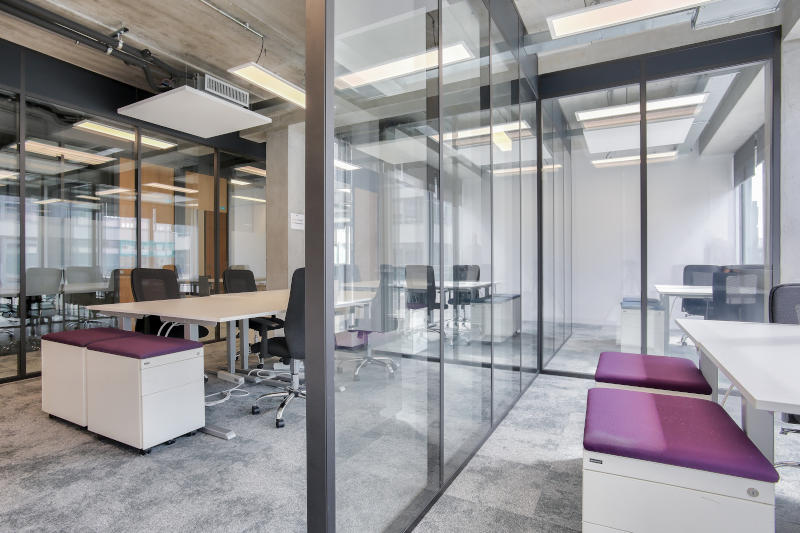
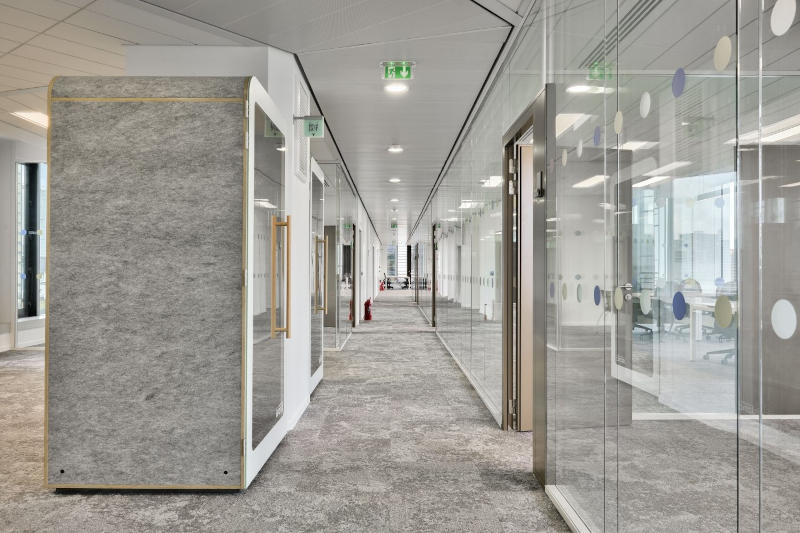
The value is not limited to the image. A space already used for filming also helps anticipate concrete issues: location scouting, access, parking, off-camera spaces, confidentiality, crew circulation, permissions and handover.
These examples do not replace a technical scout. They mainly show that an office can become a credible filming location when the backdrop, access, permitted uses and day organization are properly framed.
Common mistakes when choosing an office for filming
Even when the location scout seems convincing, some details can complicate the production day. The risk often comes from a gap between the location as perceived during the visit and the location as it will actually be used by the crew, equipment, speakers and client.
These mistakes do not necessarily make the shoot impossible. But they can create delays, adjustments, tension or a loss of quality in the final result.
Validating the backdrop before testing the constraints
An office can make a very good first impression: neat furniture, pleasant light, professional atmosphere, well-presented spaces. Yet this first impression does not always show whether the location will be easy to film.
Before validating, you need to check possible angles, camera depth, reflections, movements, furniture repositioning and the space needed around the scene. An attractive backdrop can become limiting if the crew cannot install equipment properly or vary shots without reorganizing everything.
Underestimating noise
Noise is one of the most common traps. A space may be pleasant for working, but poorly suited to clean sound recording. Ventilation that is discreet in everyday life, a nearby elevator, a busy street, an active corridor or a neighboring open space can become very disruptive as soon as a voice has to be recorded.
This point is particularly sensitive for interviews, corporate videos, speaking appearances and dialogue scenes. If sound is central to the project, the quietness of the location must be checked with as much attention as its appearance.
Forgetting preparation spaces
The filmed room is not always enough. Even a small crew needs to put down equipment, prepare speakers, store bags, keep accessories, have someone wait or organize a break.
When no annex space is planned, everything ends up concentrated in the filming area. The set becomes cluttered, movement becomes more complicated and every change takes longer. A less spectacular but better organized office may therefore prove more efficient than a very photogenic but too cramped location.
Misjudging the real size of the on-site crew
A scout is often done by two or three people. On the shoot day, the setup changes: image crew, sound, lighting, client, speakers, actors, makeup, styling, assistant, production support, and sometimes several people who will never appear on camera.
The location must therefore be assessed according to the real on-site presence, not only the size of the room being filmed. An office that is comfortable for a meeting can become tight as soon as several trades need to circulate around the set.
Failing to clarify handover conditions
Moving a table, removing chairs, hiding a logo, adding accessories or installing light stands may seem harmless. But if nothing has been planned, these adjustments can create disagreements with the location manager.
Handover conditions must be clarified before the crew arrives: who moves the furniture, within what limits, with what precautions, and in what condition the spaces must be returned. This point protects the location, but also the production, which can work more calmly.
Leaving permission questions too late
Some subjects cannot always be settled the day before: building access, parking, equipment delivery, use of shared areas, filming in a lobby, extended hours, presence of a larger crew than expected.
When these points are anticipated, they become simple organizational matters. When they are discovered too late, they can block a scene, delay setup or force the crew to revise the shooting plan.
Choosing a location that is too open for a sensitive project
A shared environment can work for light content or a very small production. But it becomes more delicate if the project involves a personality, confidential campaign, product launch, visible documents or demanding sound recording.
Confidentiality must be considered before the shoot, not only when setting up the camera. If the production needs to control movements, glances, conversations or visible elements in the image, a closed or private space will often be more suitable.
Comparing price without measuring lost time
The rental price is an important criterion, but it does not say everything. A cheaper location can cost more in lost time, complex setup, additional equipment, travel or last-minute adjustments.
Conversely, a more structured space can save time if the set is already usable, access is clear, services are available and the contact person is identified. For a short production, operational simplicity can be as valuable as the displayed price.
Location scouting sheet before renting offices for a shoot
Before validating an office for a shoot, the goal is not only to check that the backdrop works. You also need to identify the points that remain unclear. The more unclear points there are, the higher the risk of losing time on the shoot day.
This sheet can be used before booking, during the scout or in an exchange with the location manager.
- Shoot format: interview, company video, advertisement, fiction project, photo shoot or social media content?
- Date and timings: are arrival, setup, filming, breaks, teardown and departure properly planned?
- Number of people: how many crew members, speakers, clients or accompanying people will be present?
- Planned equipment: cameras, lights, microphones, cables, accessories, light set elements or heavier equipment?
- Filmed spaces: which rooms need to appear on camera?
- Off-camera spaces: where can the crew store items, wait, prepare, do makeup, brief or organize breaks?
- Access: is it easy for the crew and equipment to arrive?
- Parking or drop-off: can vehicles or deliveries be organized without blocking the production?
- Sound: does the location allow clean sound recording?
- Light: can the light be controlled according to the filming time?
- Camera depth: do the rooms offer enough depth to vary shots?
- Electricity: are the outlets, connections and technical needs compatible with the planned equipment?
- Furniture: can it be moved, hidden or reorganized?
- Shared areas: can the lobby, corridors, facade, elevator, staircase or terrace be used or filmed?
- Confidentiality: are screens, documents, client names, visible brands and movements under control?
- Insurance: can a certificate of insurance be provided?
- Permissions: are the planned uses approved by the location manager?
- Safety: are cables, circulation, emergency exits, connections and occupancy capacity compatible with the planned organization?
- Condition report: is a before / after check planned?
- Contact person: is a reference person available before and during occupancy?
Compatibility score: is the location ready for your shoot?
To use this sheet simply, count the points that remain unclear. A point is considered unclear when it has not received a clear answer, depends on later validation or could block the organization on the shoot day.
| Score | Diagnosis | Recommended decision |
|---|---|---|
| 0 to 3 unclear points | The location is probably usable. | The booking can be considered, provided the final details are confirmed in writing. |
| 4 to 7 unclear points | The location may work, but several elements still need to be secured. | Plan a technical scout, ask for guarantees or clarify the conditions before validation. |
| 8 unclear points or more | The risk of losing time on the shoot day becomes high. | It is better to request an additional visit, review the shoot format or compare another address. |
This score is not meant to replace a technical scout. It helps objectify the decision. A location can still be interesting with a few uncertainties, but the more answers are missing, the more the production may have to improvise on site.
Information to send to the location manager before booking
To save time, the production can send a simple brief to the location manager before booking. The aim is to quickly check whether the office matches the planned shoot, without multiplying incomplete exchanges.
Send the following as a priority:
- Shoot format: interview, advertisement, fiction project, photo shoot, company video or social media content.
- Date and timings: arrival, setup, filming, teardown and departure.
- Number of people present: technical crew, client, speakers, actors or accompanying people.
- Planned equipment: cameras, lights, microphones, cables, accessories, set items.
- Spaces used and filmed spaces: offices, meeting room, reception, corridors, shared areas, facade.
- Off-camera needs: storage, makeup, waiting, break, briefing or client space.
- Need for quiet or confidentiality: sound recording, sensitive information, visible people, documents or screens to hide.
- Furniture moves: items to move, hide or put back in place.
- Parking or equipment drop-off: vehicles, timings, delivery access or unloading area.
- Insurance, condition report and handover: documents to provide, liability, handover conditions.
A clear brief allows the manager to respond faster and helps the production avoid unpleasant surprises. It also makes it possible to identify early any requests that require additional permission, a schedule adjustment or a change in configuration.
Choose a location that truly supports the production day
Renting offices for a shoot can be an excellent solution when a crew is looking for a professional, lively and immediately credible setting. An already fitted space often saves time compared with creating a set from scratch, especially for institutional content, an interview, a photo shoot, an advertisement or a scene set in a realistic work environment.
But the value of an address is not limited to what the camera captures. It is also measured by ease of setup, crew circulation, control over sound and light, support spaces, confidentiality and handover conditions.
The right choice therefore rests on a balance: visual appeal, easy access, annex spaces, confidentiality, clear occupancy rules and the ability to host the crew without friction. The shorter the format, the more decisive this balance becomes.
In some cases, equipped offices, flexible private spaces or managed offices can meet this need, because they combine a professional setting already in place, existing services, an accessible address and an identified contact person. Depending on the city, format and project constraints, browsing the Hiptown spaces available in France can help identify an address compatible with a production day.
A good filming location is not only pleasant to film. It is a space that allows the crew to move forward smoothly, from equipment arrival to final handover.
FAQ – Renting offices for a shoot
Can offices be rented for a one-day shoot?
Yes, provided the location clearly allows it and the uses are framed before occupancy. In particular, the timings, number of people present, spaces used, planned equipment, insurance, condition report and handover conditions need to be specified.
To secure the organization, Film France notably recommends asking the production company for a certificate of insurance, appending it to the agreement and designating a contact person on the filming crew side.
What type of office should you choose for a corporate video?
For this type of content, it is often preferable to choose a quiet, bright and sufficiently flexible space that allows you to vary shots without changing address. Ideally, the crew should be able to alternate between a speaking appearance, a few team shots, a meeting shot or a more informal sequence, while maintaining visual consistency. This variety enriches the content without multiplying filming locations.
The choice also depends on the planned format: interview, team sequence, speaking appearance, product demo, client shoot or content designed for social media. The more sequences the shoot involves, the more important it becomes to check off-camera spaces, access and crew circulation.
Can a coworking space be used as a filming location?
Yes, a coworking space can work for certain light formats: social media content, short interview, short capture or simple shoot. However, it may be less suitable if the production needs quietness, confidentiality, control over the set or a larger technical crew.
Before validating this type of location, you need to check movements, noise, authorized spaces, elements visible on camera and occupancy rules. In some cases, a private space or equipped offices will offer a more controlled setting.
What criteria should be checked before booking an office filming location?
The main criteria are access, noise, light, camera depth, electricity, furniture, off-camera spaces, circulation, confidentiality, permissions, insurance, safety and handover.
The Film France practical guide to filming notes that requests generally need to specify the project, dates, number of planned days, certificate of insurance and description of the scenes to be filmed in the location concerned. Even for a private office, these reference points help frame the request and avoid misunderstandings.
Do you need permission to film in private offices?
At minimum, you need clear agreement from the location manager or owner. Additional steps may be required if the shoot involves shared areas, the facade, public space, parking, a significant equipment delivery or a specific installation.
In Paris, for example, certain filming requests must be submitted through the procedures provided by the city. The page Submitting a filming authorization request in Paris notably specifies the applicable deadlines and procedures. For another area, it is better to check the rules with the town hall, local film commission or competent organization.
What precautions should be taken if people appear on camera?
If people are recognizable on camera, the question of image rights must be anticipated. Service-public.fr explains when authorization may be required and how to act in the event of difficulty.
In an office, this particularly concerns employees, visitors, clients or people present in shared areas. The simplest solution is to avoid unplanned movements in the frame, or to obtain the necessary permissions before filming.
Why choose equipped or private offices for a shoot?
Equipped or private offices can save time when the production is looking for a professional backdrop already in place, with better control over access, movements, noise and annex spaces. They are particularly useful when the shoot needs to remain smooth, confidential or simple to organize.
This type of solution can also limit last-minute adjustments: furniture already present, meeting spaces available, waiting areas, identified contact person, on-site services and easier-to-frame occupancy conditions.